“Why should I bother with organic social media when I could just run paid ads?”
Honestly, I understand the question. You have a business to run. Creating content takes time, planning, and consistency. Paying to place your business in front of more people can seem like the easier option.
Paid advertising can be useful. But paid ads and organic social media are not doing the same job.
Paid ads can introduce people to your business. Organic social helps them understand who you are, see your expertise, and decide whether they feel comfortable contacting you.
What happens after someone sees your ad?
Most people do not see one ad and immediately hire a business they know nothing about. They look it up first.
They may visit your Instagram, Facebook, or LinkedIn profile. They want to know whether your business is active, what you offer, and what it might be like to work with you.
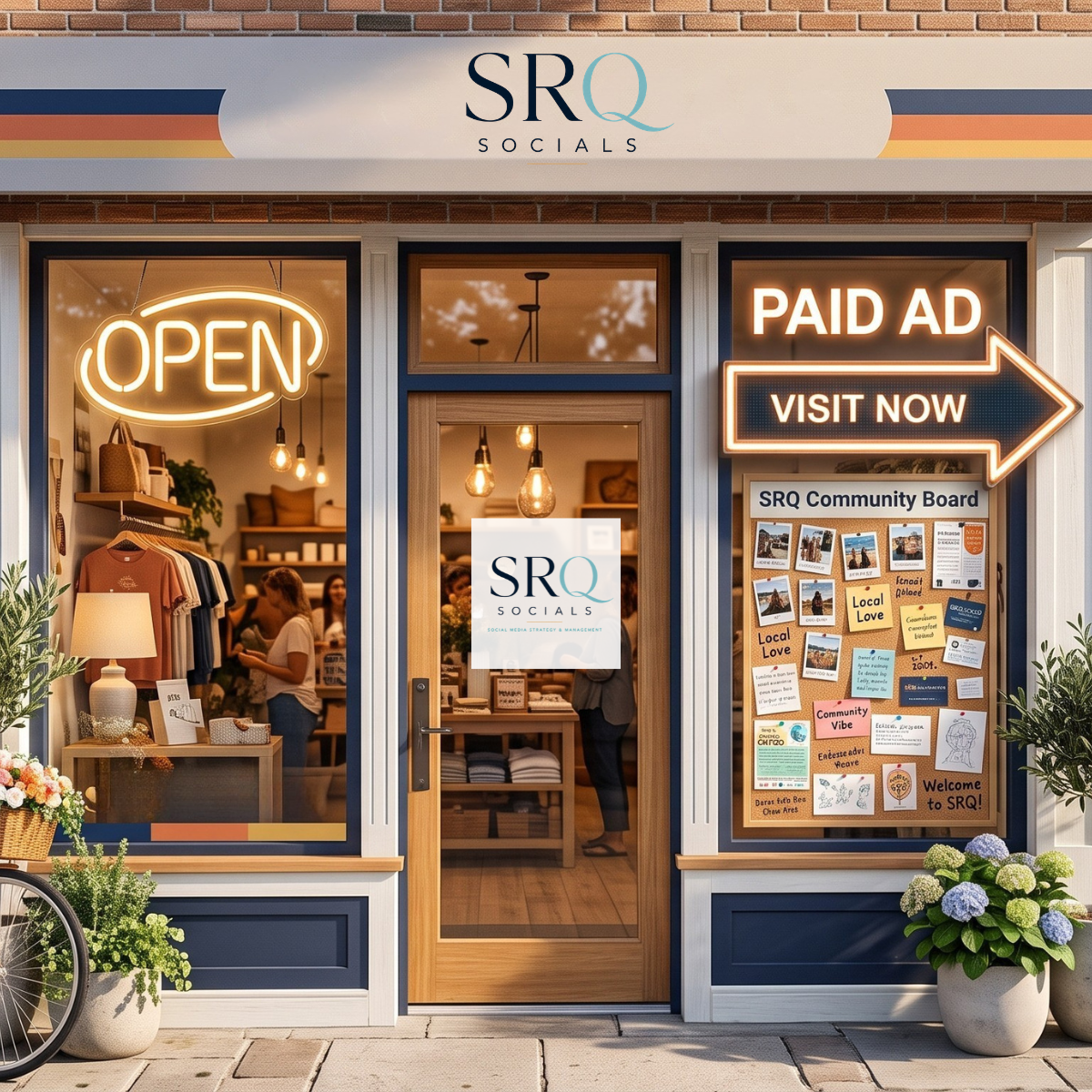
That is where organic social media matters. Running ads without maintaining your organic presence is a little like paying for a sign that directs people to an empty storefront.
Paid and organic social have different jobs
Paid social media is advertising. Organic social includes the posts, videos, Reels, and updates you publish without paying to distribute them. It also includes replying to comments and messages.
Hootsuite’s guide to organic and paid social media explains that paid social creates targeted reach, while organic social helps build relationships, brand awareness, and community over time.
Put simply: paid social buys visibility. Organic social builds familiarity and trust.
Organic content gives people something to evaluate
An advertisement is usually built around one focused message. Your organic content fills in the rest of the story.
It can answer common questions, explain your process, show examples of your work, and introduce the people behind the business. That matters because social media content influences real purchasing decisions.
In research from Sprout Social involving more than 2,200 social media users, 76% said content they saw on social had influenced a purchase during the previous six months. That included ads, influencer posts, and brand content, so organic social does not deserve all the credit. But it confirms that what people see on social can shape what they choose.
People want content that feels human
AI has made creating content faster and easier. I use it in my own process, and it can be incredibly helpful for organizing ideas, developing a starting point, and making content creation more manageable.
But faster does not always mean better.
Sprout Social’s 2026 Social Media Content Strategy Report found that consumers ranked human-generated content as their number-one content priority for brands.
Additional Sprout Social research found that 58% of social media users want brands to interact with their audiences, while 52% are concerned about brands publishing AI-generated content without disclosing it.
That gives small businesses an advantage. You have real customer conversations, personal experience, local knowledge, and a point of view another company cannot duplicate. AI can help you communicate those ideas. It should not erase the personality behind them.
Organic social helps people remember you
Not everyone who finds your business is ready to buy today.
Someone may see a helpful post now, recognize your name a few weeks later, and contact you months from now when the timing is right. That does not mean the earlier content failed.
Organic social media creates familiarity before the customer needs your service. It gives people repeated opportunities to understand what you do and remember your business. Not every post needs to produce an immediate lead to be useful.
Organic content also shows how you work
For many service-based businesses, customers cannot fully evaluate the service before hiring someone. Organic content makes your expertise more visible.
You can explain common mistakes, share practical advice, address misconceptions, or show why a detail your customers may overlook actually matters.
You do not need to give away your entire service. You only need to provide enough insight for people to understand how you think and approach their problem.
Do you need to post every day?
No. Organic social media matters, but that does not mean you need to publish constantly, join every platform, or chase every trend.
A realistic schedule with a few useful posts is better than publishing every day for two weeks and then disappearing for three months.
The goal is not to fill the feed. It is to make your business easier to understand, trust, and remember.
Should you use organic social or paid ads?
It does not have to be one or the other. Paid advertising can create faster visibility. Organic social media gives that visibility a stronger foundation.
The more useful question is: when someone discovers my business, what will they find when they look me up?
Paid ads can help your business get seen. Organic social helps people decide whether they want to choose you.
Build a social presence with a purpose
You do not need to become a full-time content creator to maintain a valuable social media presence.
You need a strategy that reflects your goals, answers your customers’ questions, and gives you a manageable way to show up consistently.
At SRQ Socials, I help businesses turn their knowledge and experience into thoughtful, consistent social media content without making social media feel like another full-time job.
Ready to build a more intentional social presence?
Let’s Get Started